
Buying a CCTV system has never been more confusing. The shelves — physical and digital — are stacked with cameras whose specification sheets read almost identically: 4K, AI detection, colour night vision, two-way audio, cloud storage. Strip away the marketing and most buyers are left with the same question: how do you tell the difference between a camera that will actually catch something and one that will simply generate a year's worth of false alerts before the battery gives out? This guide works through every decision point, in the order you should encounter them.
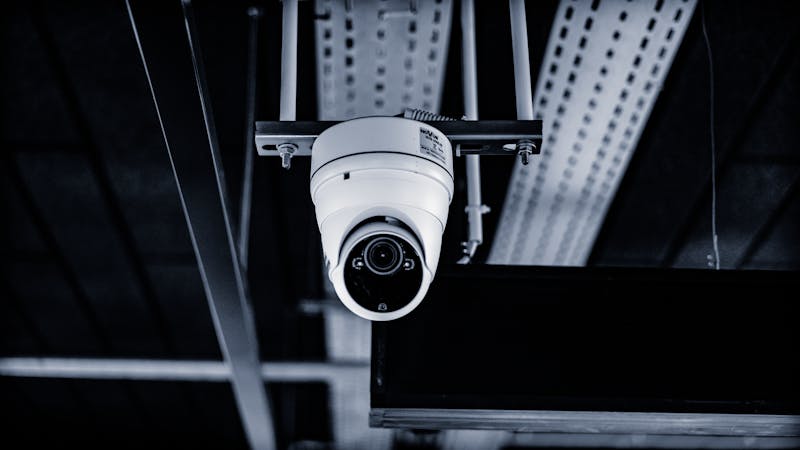
Modern IP security cameras are now the default across residential and small business installations.
Resolution: Don't Buy 1080p in 2026
Full HD (1080p / 2MP) was the standard for over a decade, but 2K (4MP / 1440p) has now become the baseline worth buying new. The difference matters practically: at 1080p, a face captured at six metres looks like a rough outline in most lighting conditions; at 2K, the same shot provides enough detail for identification. The shift in manufacturing cost means 2K cameras now start below £60, making 1080p effectively a clearance item.
| Resolution | Pixels | Best For | Storage per Day* |
|---|---|---|---|
| 1080p (2MP) | 2.07 million | Basic indoor monitoring where identification is not required | ~15 GB |
| 2K / 1440p (4MP) | 3.69 million | Doorways, gardens, most residential use — the 2026 default | ~25 GB |
| 5MP | 5 million | Driveways, boundaries, face identification at distance | ~40 GB |
| 4K (8MP) | 8.3 million | Licence plate reading, large areas, forensic-quality footage | ~70 GB |
*Approximate figures for continuous H.265 recording at standard bit rate. Motion-only recording reduces this by 60–80%.
Buy 2K (4MP) as your floor for any new camera. For driveways and any location where you need to read a vehicle registration, buy 4K. For indoor rooms within five metres, 2K is sufficient and costs half as much to store.
AI Detection: Useful Features vs Marketing Noise
Every camera above budget tier now ships with some form of on-device AI, but capability varies enormously. Person detection — which distinguishes a human from general motion such as a cat, a passing car, or tree branches — is the feature that actually changes day-to-day usability. Without it, motion alerts become noise within a week and most owners stop checking them. Person detection alone reduces false alerts by 70–90% in typical residential settings, according to independent testing by consumer security reviewers.
Beyond person detection, the features worth paying for in 2026 are:
- Vehicle detection — identifies cars and vans specifically. Genuinely useful for driveways and parking areas; prevents alerts from delivery lorries passing in the background.
- Package detection — flags when a parcel is left on your doorstep. Available on premium consumer cameras from Ring, Google Nest, and Eufy. Reduces parcel theft response time significantly.
- AI auto-tracking (PTZ cameras) — motorised cameras that follow a moving subject automatically. Useful for large outdoor areas; note that a single-camera failure creates a larger blind spot.
- Licence plate recognition (LPR) — requires 4K resolution, correct mounting angle, and usually a dedicated camera optimised for the task. Consumer cameras advertise this feature, but reliable plate capture demands careful setup.
Facial recognition deserves a separate note. Some consumer cameras, including certain Eufy models, offer on-device facial recognition to distinguish known household members from strangers. The technology works, but using it in any area that captures people beyond your own household triggers significant UK GDPR obligations (see the GDPR section below). Treat it as a feature for internal spaces only.
Pixel counting (claiming "8MP 4K ultra-HD" on a sensor that compresses heavily), built-in sirens on outdoor cameras (they can be disabled by cutting power), and "AI cloud analytics" subscriptions that replicate what on-device AI already does for free on mid-range cameras. Pay for hardware AI. Avoid paying for cloud AI subscriptions that duplicate it.
Storage: Cloud, Local, or Both?
Storage is where the real cost of a CCTV system sits, and it is the area most buyers underestimate at purchase. A camera advertised at £79 with "free cloud storage" typically offers 24 hours of event clips on the free tier, reverting to a £4.99/month subscription for anything useful. Over three years, that adds £180 per camera to the system cost before a single fault or cancellation.
| Storage Type | How It Works | Pros | Cons |
|---|---|---|---|
| SD Card | MicroSD card in the camera body records locally | No ongoing cost; simple setup | Camera theft removes the evidence; card wear and failure after 12–24 months |
| NVR / DVR | Dedicated recorder with hard drive; cameras stream to it over the network | Weeks or months of footage; no subscription; footage survives camera theft | Upfront hardware cost (£150–£400); recorder itself must be secured |
| Cloud | Footage sent to provider's servers | Off-site — survives any physical theft; accessible from anywhere | £3–£15/camera/month; footage may be subject to US data law (Ring, Arlo) |
| Hybrid | Local NVR with cloud backup for event clips | Redundancy; local access speed plus remote accessibility | Most complex setup; highest upfront cost |
The 2026 trend worth noting: budget-conscious buyers are increasingly choosing cameras with free local storage and optional cloud top-up — brands such as Reolink, Eufy, and TP-Link Tapo have built their market position on this model. Cloud-first providers (Ring, Nest, Arlo) increasingly restrict core features like continuous recording and extended clip history behind subscription tiers that did not exist three years ago.
Wired, Wireless, or Battery: Which Connection Suits You?
Connectivity is the single biggest factor in installation cost and long-term reliability. Power over Ethernet (PoE) — where a single cable carries both power and data — is the most reliable connection method available, but it requires cable runs to every camera location, which typically means professional installation at £80–£200 per camera in labour. Wireless cameras eliminate the cable run but introduce a dependency on Wi-Fi signal quality and, critically, on the mains power supply at the installation point.
- PoE (wired Ethernet) — best for permanent residential installs, business perimeters, and anywhere reliability is non-negotiable. Single cable; no Wi-Fi dependency; does not depend on a battery. Requires professional installation in most homes.
- Wi-Fi (mains powered) — suited to locations with a nearby power socket and reliable Wi-Fi signal. Wi-Fi jamming is a documented method used in UK domestic burglaries; the frequency of reported incidents has increased since 2023 (Action Fraud). Use 5GHz where available and ensure the camera has a physical anti-tamper alarm.
- Wire-free (battery) — the right choice for rental properties, outbuildings, and locations without nearby power. Battery life ranges from three to twelve months depending on activity level. Solar panel accessories extend this significantly. Continuous recording is impractical; motion-triggered only. Not suited to high-traffic areas.
- 4G / LTE cameras — for remote properties, construction sites, and farms. Monthly SIM plan required; data costs can be significant on high-activity sites.
Night Vision: Why Colour Has Overtaken Infrared
Infrared night vision produces black-and-white footage and has been the standard for outdoor cameras since the early 2000s. Colour night vision — which uses a larger sensor, wider aperture, and an onboard spotlight triggered by motion — produces full-colour footage at night that is far more useful for identification purposes. In 2026, colour night vision with a motion-activated spotlight is standard on outdoor cameras above £70. IR-only cameras are effectively the budget tier.
The practical difference matters for incidents: black-and-white footage cannot capture clothing colour, vehicle colour, or the colour of distinguishing features. UK police guidance increasingly notes this limitation when reviewing domestic CCTV submitted as evidence.
Camera Types: Matching the Hardware to the Location
Camera form factor determines field of view, vandal resistance, and deterrent effect. Buying the right type for each location — rather than fitting one type everywhere — produces significantly better coverage.
Bullet Cameras
Cylindrical housing, typically wall or pole mounted. The most visible deterrent: intruders can clearly see they are under surveillance. Better for distance monitoring — driveways, boundary fences, long approaches — than wide-area coverage. Varifocal lens variants allow installation-time zoom adjustment. More exposed to physical tampering than dome cameras.
Dome Cameras
The dome housing conceals lens direction, making it harder for an intruder to identify blind spots or to know exactly what the camera covers. More aesthetically neutral — the preferred choice for indoor commercial installations, offices, retail spaces, and hospitality settings. IK10-rated vandal-resistant variants are available for high-risk exterior mounting.
PTZ Cameras (Pan-Tilt-Zoom)
Motorised cameras that cover very large areas from a single unit through programmable rotation and optical zoom. AI auto-tracking in 2026 models follows moving subjects without manual intervention. Suited to large properties, business car parks, and farms. At £400–£1,200+ per unit, they represent a significant investment — and a significant single point of failure if the camera goes offline or is disabled.
Doorbell Cameras
Wide-angle (140–180°) camera integrated with a doorbell, covering the approach to a front door. Two-way audio is standard across all tiers. Pre-roll recording — which captures a few seconds before a motion trigger — is available on premium models and significantly improves the usefulness of footage. Wired variants (using existing doorbell wiring) are preferred over battery for 24/7 recording. Note: doorbell cameras almost always capture some portion of a public pavement, which triggers UK GDPR obligations.
Wire-Free Battery Cameras
No cables, no power socket required. Ideal for outbuildings, sheds, rear garden corners, and anywhere a cable run would require significant building work. The trade-off is continuous recording — it is impractical on battery cameras, which rely on motion-triggered clips to preserve charge. Not suitable for high-traffic areas, where activity volume will exhaust the battery in days rather than months.
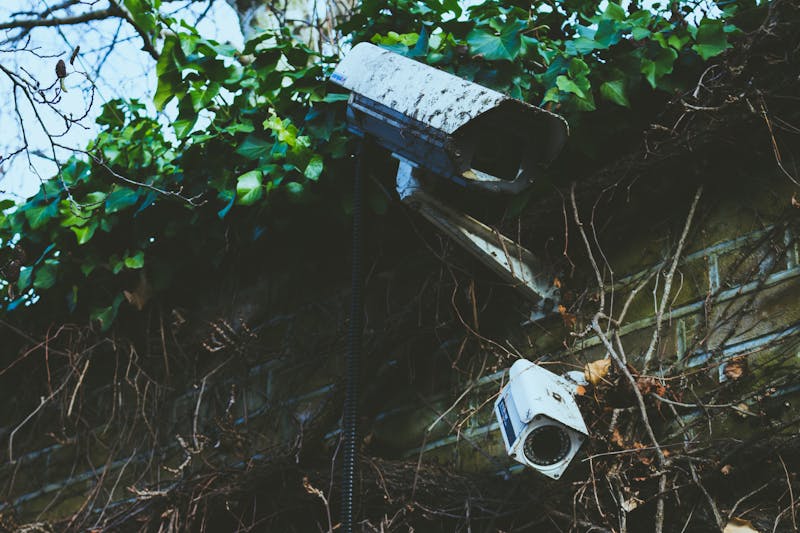
Overlapping fields of view eliminate blind spots — the most common installation mistake is using too few cameras.
UK GDPR and CCTV: What Homeowners Must Know
UK GDPR, governed by the Data Protection Act 2018 and overseen by the Information Commissioner's Office (ICO), applies to domestic CCTV the moment your camera captures any area beyond your own private property — a neighbour's garden, a shared driveway, a public pavement, or a communal entrance. The household exemption that exempts purely private recordings does not extend past your boundary.
When UK GDPR applies to your CCTV, you must:
- Have a clear, documented legitimate purpose (crime prevention is accepted).
- Display visible signage notifying people they are being recorded, positioned so it is seen before they enter the monitored area.
- Store footage securely with limited access — sharing footage on social media before an investigation is concluded has resulted in ICO investigations.
- Delete footage on a defined, regular schedule — the ICO recommends no longer than 31 days for most residential and small business use.
- Respond to Subject Access Requests within one calendar month.
Neighbour disputes involving CCTV are one of the fastest-growing categories of ICO complaint. If you believe a neighbour's camera captures a significant portion of your private garden or windows, you can raise a formal concern with the ICO. Courts have previously ordered cameras repositioned or removed where they were found to capture a neighbour's property disproportionately to any legitimate security purpose.
What Should CCTV Cost in 2026?
Hardware costs have fallen significantly, but total system cost — including installation labour, storage subscriptions, and ongoing maintenance — remains easy to underestimate. These are realistic 2026 figures for UK residential and small business buyers.
| Tier | System | Hardware | Install | Storage |
|---|---|---|---|---|
| Budget DIY | 2–4 wireless cameras, SD or basic cloud | £150–£400 | Self | £0–£10/mo |
| Mid DIY / Semi-pro | 4-camera 4K NVR kit, PoE or wireless | £400–£900 | Self or £200–£500 assist | £0 (NVR local) |
| Professional residential | 4–8 cameras, cabling, NVR, pro install | £600–£1,500 | £800–£2,000 | £0–£15/mo |
| Small business | 8–16 cameras, NVR, pro install | £1,500–£4,000 | £1,500–£4,000 | £0–£50/mo |
Individual camera hardware costs: budget tier £25–£80 (1080p/2K, basic AI, SD storage); mid-range £80–£200 (2K–4K, strong AI detection, colour night vision); premium £200–£600+ (4K, advanced AI, PTZ or superior weatherproofing). The wide spread within each tier reflects the difference between online-only brands and those sold through professional installers.
Ten Mistakes That Will Waste Your Money
- Too few cameras, too many blind spots. A single camera on the front door misses side gates, back gardens, and parked vehicles. Map every access point before buying, then add one camera per route.
- Wrong resolution for the job. Buying 1080p for a driveway where you need to read licence plates. The footage looks adequate until an incident occurs — at which point it is not.
- Ignoring Wi-Fi signal before buying wireless cameras. Thick walls, outbuildings, and distances beyond 15 metres from the router regularly cause wireless cameras to drop offline or produce stuttering footage. Test signal strength at each camera location before purchasing.
- Mixing ecosystems without a plan. Ring cameras, a Nest doorbell, and a Hikvision NVR from three different apps means three storage subscriptions, no unified timeline, and no way to export clips in a consistent format for the police.
- Not calculating total cost of ownership. A camera at £79 with a £4.99/month subscription costs £259 in year one and £479 over three years — before any hardware replacement. Calculate the three-year cost, not the box price.
- Mounting cameras too high. Cameras mounted above 3.5 metres capture the tops of heads rather than faces. For face identification, mount between 2.1 and 2.7 metres, angled downward at 15–45 degrees.
- Skipping firmware updates. Consumer IP cameras running unpatched firmware represent a documented attack surface. Multiple UK botnets have been traced to compromised home cameras. Enable automatic updates wherever the option exists.
- Ignoring GDPR. Installing wide-angle cameras that capture a neighbour's garden or a public pavement without understanding UK data protection obligations. ICO investigations are time-consuming and penalties apply for serious breaches.
- Relying on cameras alone. CCTV is a deterrent and investigative tool, not a prevention system. College of Policing research shows CCTV alone reduces crime by 13%; combined with improved lighting and physical security measures, reductions of 34% are achievable.
- Battery cameras in high-traffic areas. A battery camera facing a busy street or in an area with wildlife will exhaust charge in days and generate thousands of clips. Match the camera type to the expected activity level.
Frequently Asked Questions
In most cases, no. Domestic CCTV cameras attached to a house fall under permitted development rights and do not require planning permission. Exceptions apply for listed buildings, conservation areas, and cameras mounted on a separate structure. Check with your local planning authority if in any doubt.
A minimum of 4MP (2K) is recommended for reliable plate identification at close range. For vehicles more than eight to ten metres from the camera, 4K (8MP) is preferable. Placement matters as much as resolution: mount the camera between 2 and 3 metres high with a direct, forward-facing view of the vehicle approach. Wide-angle or fisheye lenses distort number plates significantly.
The ICO recommends no longer than 31 days for domestic and small business use, unless footage is required in connection with an active incident or investigation. There is no statutory minimum retention period for home use, but you must have a defined deletion schedule, store footage securely, and respond to Subject Access Requests within one calendar month.
If a neighbour's camera captures a significant portion of your private garden or interior spaces, UK GDPR applies and they must have a legitimate purpose, display signage, and handle the data lawfully. You can raise a concern with the ICO. Courts have ordered cameras repositioned or removed where they were found to capture a neighbour's property disproportionately.
For driveways, car parks, and any location where face or licence plate identification matters from a distance: yes. For indoor rooms, doorways, and areas within five metres, 2K delivers sufficient detail at lower storage cost. A single 4K camera running continuous recording requires roughly four times the storage of a 1080p camera — factor this into your NVR capacity planning.